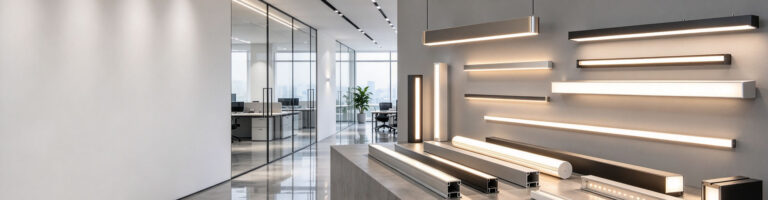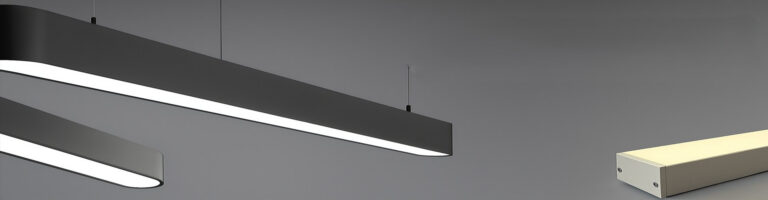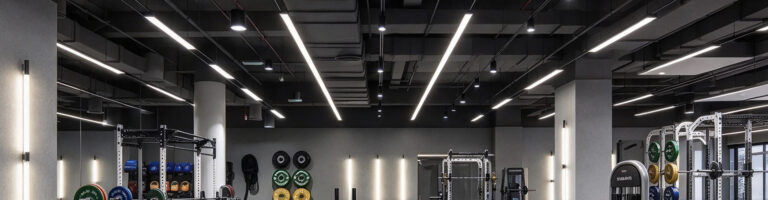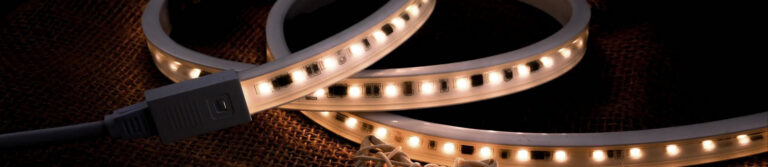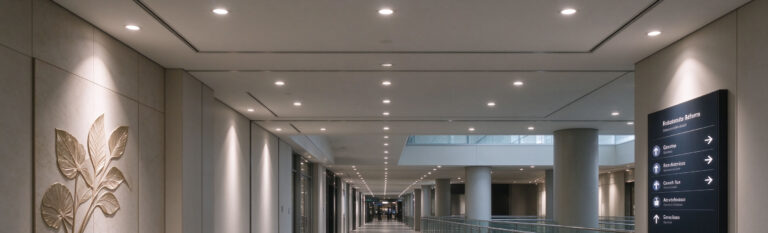
When you plan the lighting for a supermarket, grocery store, or fresh-food market, linear lighting is rarely an option — it is the backbone of your general illumination. It lights the shelving runs, guides customer flow, makes fresh produce and packaged goods look more appealing, and keeps your energy bill in check across 14+ hours of daily operation. As LIISEE — a linear lighting design and customization factory — we wrote this for you, the buyer or specifier: from the concrete demands of a supermarket environment, to how the fixtures install, to who stands behind them after handover.
I. What a Supermarket Demands from Linear Lighting (Performance)
A supermarket is not an office, and not a hotel lobby. Its lighting must serve three masters at once: make merchandise sell, keep shoppers lingering, and keep operating costs low. These are the metrics you should watch most closely when specifying.
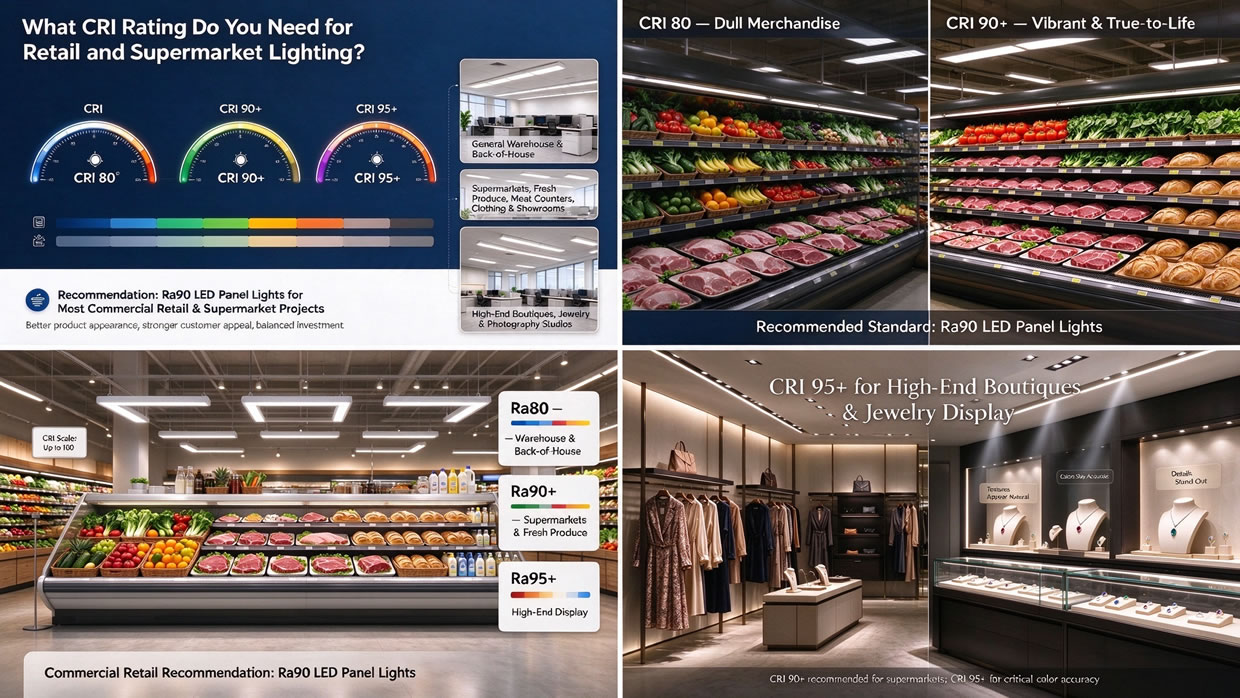
1. High CRI — let the products sell themselves
Shift the color even slightly and freshness perception drops. We recommend CRI 90+ as the baseline for general supermarket lighting, stepping up to CRI 95+ high-fidelity for fresh produce, meat, and bakery zones, while CRI 80+ is sufficient for back-of-house and storage aisles where cost matters more. The LIISEE linear system offers all three tiers, so you can grade the lighting by zone instead of applying one standard everywhere.
2. Low glare (UGR < 19) for shoppers and staff
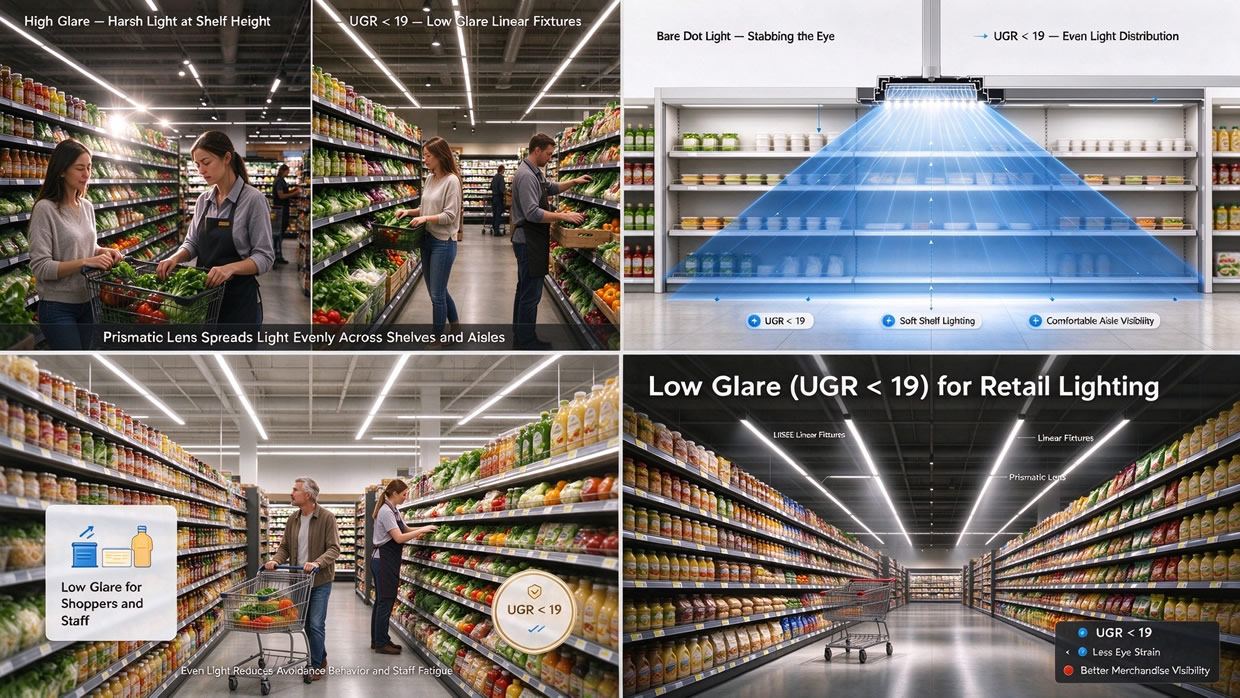
Glare is the invisible killer of retail lighting: a bare, harsh “dot” of light at shelf height makes customers instinctively avoid the area and fatigues staff over long shifts. With professional optical components such as our prismatic lens, LIISEE linear fixtures achieve a UGR < 19 low-glare performance — light is spread evenly across shelves and aisles rather than stabbing the eye.(UGR is a CIE standard metric to calculate discomfort glare from indoor artificial lighting. The lower the UGR value, the less glaring the light source.UGR<19 is the widely accepted limit for supermarkets and retail spaces. Lighting with UGR<19 avoids harsh direct light to shoppers and staff, reduces eye fatigue, and creates a comfortable shopping environment.)
3. CCT & dimming matched to time-of-day and category
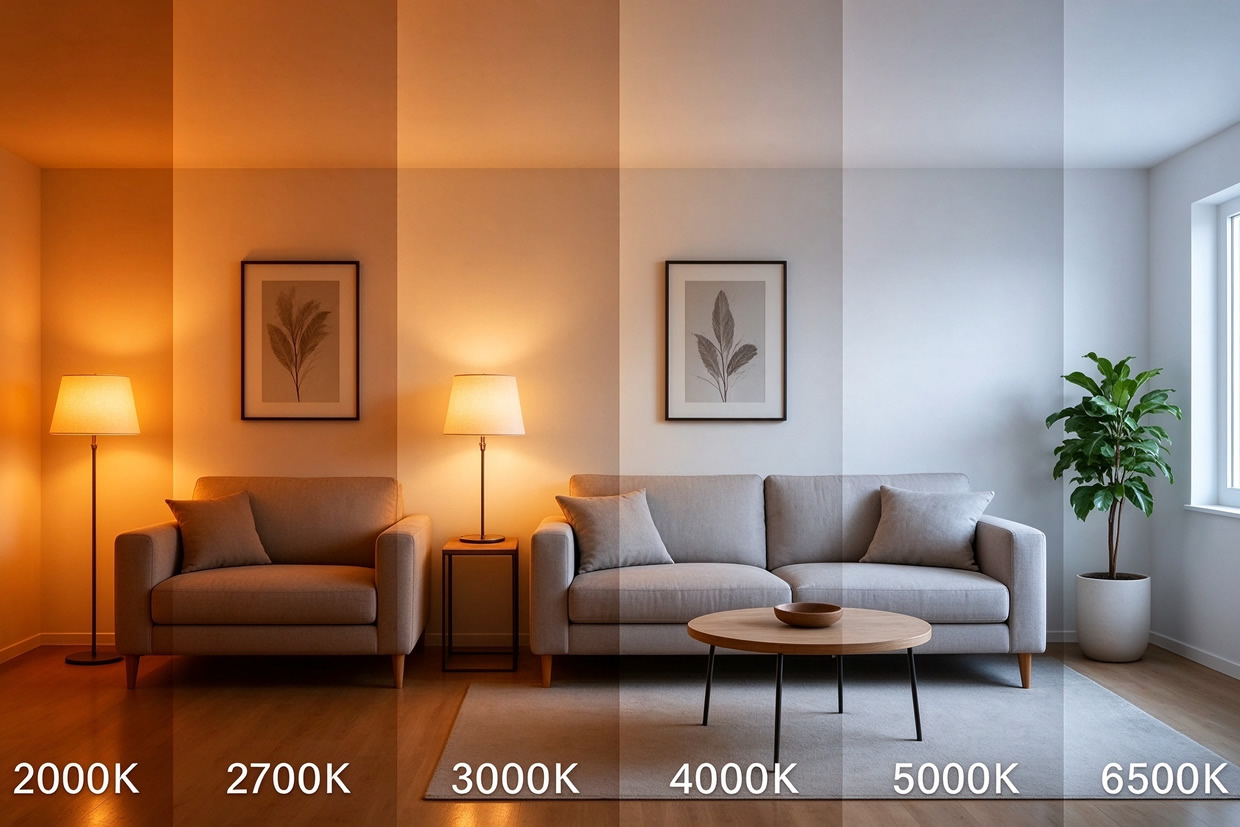
Different times of day and different product categories call for different “light moods.” LIISEE covers fixed color temperatures of 2700K / 3000K / 3500K / 4000K and supports tunable white (approx. 2700–5000K). Combined with 0–10V, DALI, and DMX dimming protocols, you can deploy lighting like this:
- Produce, bakery & fresh meat: warmer tones (around 3000K) to boost appetite appeal;
- General merchandise & main aisles: neutral white (4000K) for clarity without fatigue;
- Promotions & holidays: use DMX for dynamic scenes that pull attention.
4. High efficacy & long life to lower operating cost
Supermarket lights run almost all day, so electricity is a long-term account. High-efficacy LEDs paired with quality drivers cut energy per square meter while holding brightness, and the low-lumen-depression characteristics of the linear modules mean fewer replacements and less maintenance downtime. We suggest you compare “lumens per watt” and the “lumen-maintenance curve” alongside unit price — not the sticker cost alone.
5. Gapless joining for a clean visual
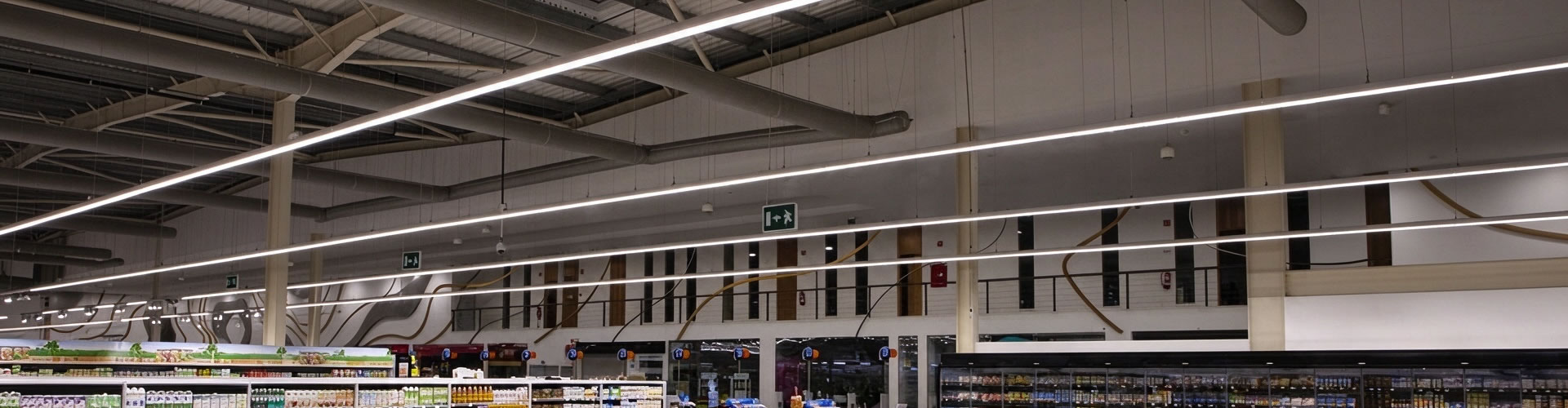
Long aisles hate visible dark seams and bulky joints. LIISEE’s gapless joining solution connects multiple sections into one continuous run of light, reducing on-site caulking and alignment labor while giving the ceiling a unified, premium look.
6. Protection & thermal management by zone
Ceiling height, proximity to refrigerated cases, and exposure to entrance drafts all dictate the sealing, thermal, and lens requirements of the fixture. We confirm the mounting location and environment with you at the design stage and match the right solution — general PC lens, flush optical kit, diffuser, or other — instead of forcing one product into every zone.
II. Installation Methods: Four Main Options, Chosen to Fit
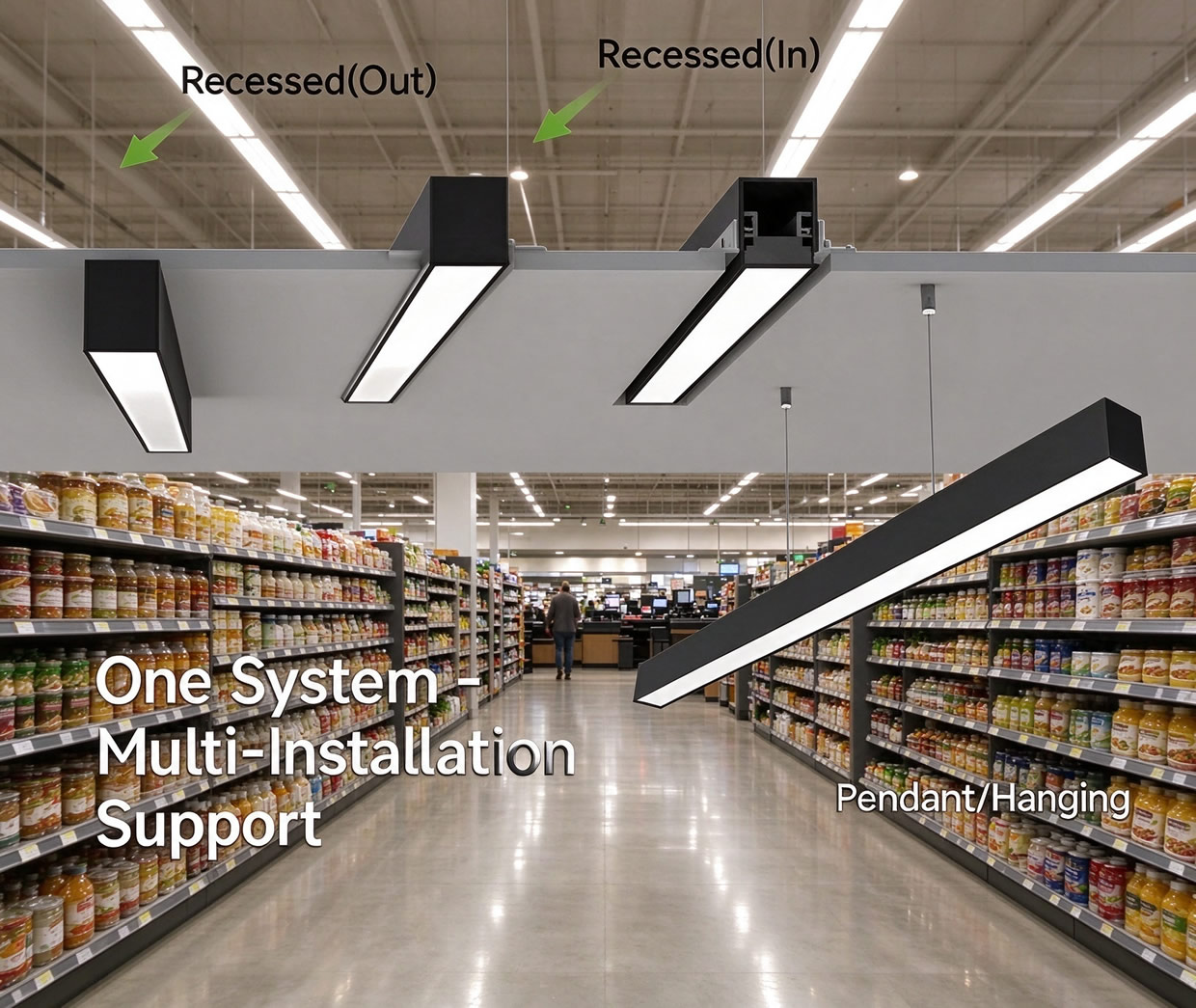
The same led linear fixture, mounted differently, casts a completely different result. LIISEE supports the four standard installation types below and can mix them within a single project:
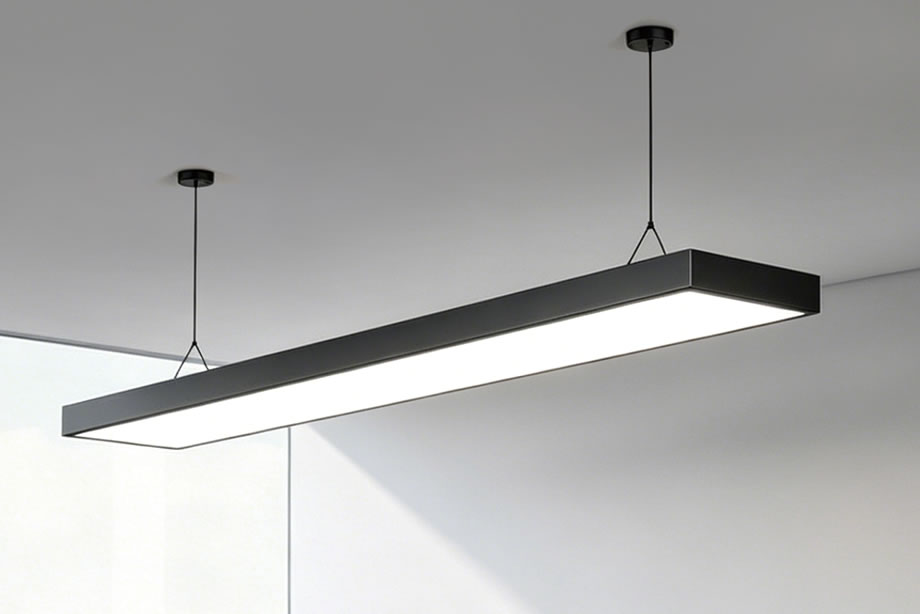
Pendant
Suspended from the ceiling by cords or rods — ideal for atria, main aisles, and entrance double-height zones. It leaves room for overhead services and washes light evenly from above, giving the supermarket its sense of openness. Also the easiest to retrofit below an existing ceiling.
Ceiling Mounted
Mounted directly to the ceiling plane — the simplest structure, suited to standard-height sales floors and above warehouse-style racking. Minimal modification to the existing ceiling, fast to install, lower cost.
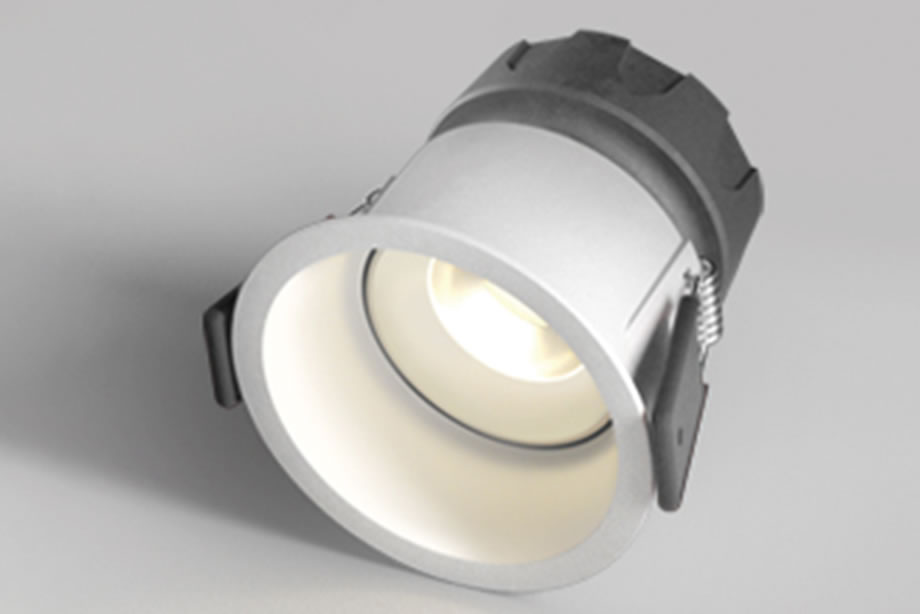
Trimed Recessed / Trimless
Flush with the ceiling, virtually hiding the fixture body — for premium supermarkets, high-end fresh zones, and “see the light, not the luminaire” aesthetics. It requires ceiling cavity provisions, so we recommend involving us at the architectural design stage.
Wall Mounted
Used for wall shelving, promotional walls, and checkout backwalls as accent and wall-wash lighting that strengthens the vertical presentation of merchandise.
Custom lengths & curved modules
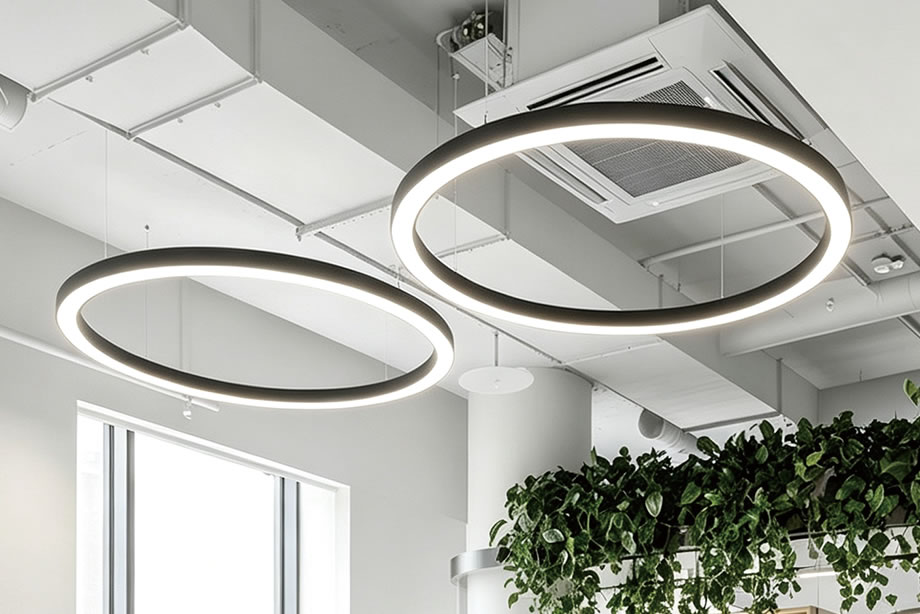
Supermarkets are rarely perfect rectangles. LIISEE provides custom section lengths and curved modules (including 1/8, 1/4, 1/2, and full circles) that follow islands, curved checkout counters, or brand-logo shapes — turning lighting into part of the spatial design.
Factory pre-assembly vs. field joining
We prefer factory pre-assembly with numbered packaging: dimensions, interfaces, and dimming addresses are set before shipment, so on-site work is just sequential hanging and connection. This shortens the schedule and drastically reduces field errors — the core advantage of a customization factory over “buying standard products and piecing them together.”
III. After-Sales: The Promise of a Customization Factory
Selling the lights is only the beginning. The questions you care about — who do I call, how fast is resolution, where do spares come from — we answer from a factory-direct logic.
Design alignment & prototyping
At project kickoff we align with your design and engineering teams on drawings, CCT, CRI, dimming protocol, and mounting method, and provide samples and prototypes so you see the real light effect before volume — not guess from a spec sheet.
Warranty & spare parts
We offer an industry-standard warranty (specific term per contract) on standard products, and keep drivers, lenses, and joining components as stock spares for fast swap — avoiding the “one driver fails, the whole row goes dark” scenario.
Dimming system integration & technical support
If your project involves DALI / DMX scenes or building-management integration, we assist with address assignment, scene commissioning, and controller matching — connecting the lighting into your operations rather than leaving it as isolated fixtures.
Lead time & stock
Backed by a 7,000+ m² owned industrial base and 15+ years of industry experience, we balance customization lead time against volume stock so your opening date or store-expansion plan keeps its buffer.
Conclusion: Hand Your Lighting to a Factory That Understands Customization
Choosing supermarket linear lighting is, on the surface, a comparison of brightness and price. What really matters is whether the color rendering is high enough, the glare is contained, the installation fits the space, and someone stands behind it when something breaks. As a linear lighting design and customization factory, LIISEE does not send you a product catalog and walk away — we start from your floor plan and string performance, installation, and after-sales into one deliverable chain.
If you are planning or renovating a supermarket’s lighting, send us your floor plan, zone list, and target CCT — we will first return a scenario-based configuration proposal, then talk prototyping and lead time.