Custom Suspended Linear Ceiling Light: How to Specify One That Actually Works
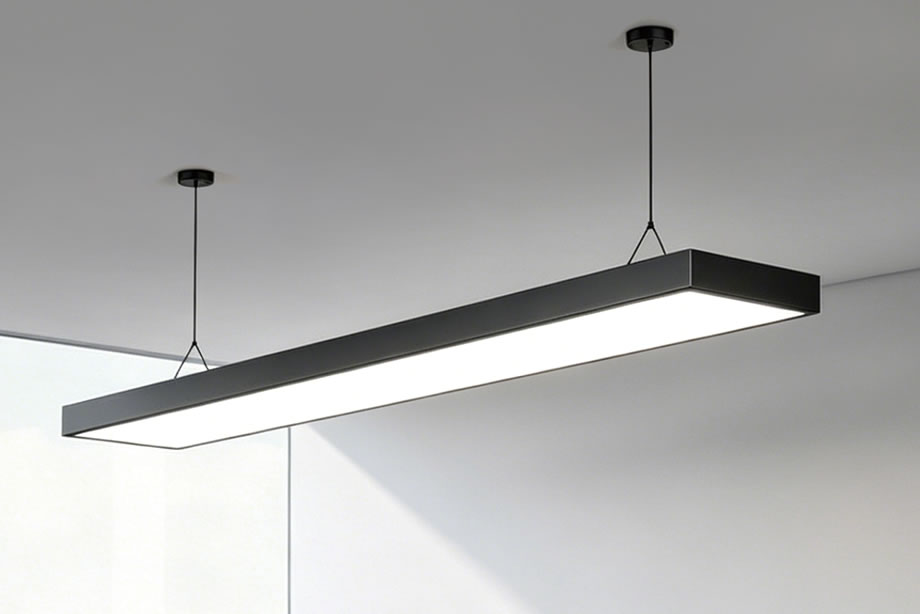
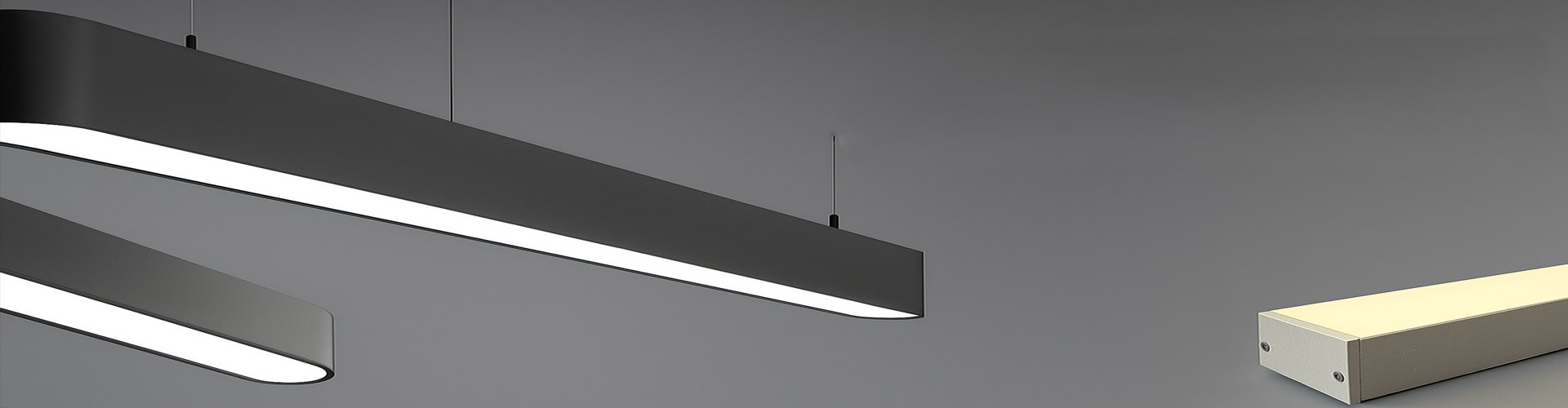
A custom suspended linear ceiling light is a luminaire built from an extruded aluminium profile that hangs from the structural soffit on wires or rods and emits a continuous line of light rather than a point source. “Custom” means you control five variables yourself: length, profile cross-section, light output, distribution (direct, indirect or both) and control protocol. Specify all five before you request a quotation — a price quoted on length alone is not comparable between suppliers.
Key takeaways
- You are buying five variables, not one product: length, profile section, output, distribution and control.
- For any screen-based workspace, ask for a measured UGR figure below 19 and measured flicker data across the dimming range.
- Continuous runs succeed or fail at the joint — request photographs of a real seam, not a rendered one.
- Indirect light turns your ceiling into the luminaire. Confirm its reflectance and colour before you commit to it.
- Choose DALI when you need addressing or tunable white; 0–10 V is enough when you only need to dim.
- Send a run drawing, target lux and UGR, CCT/CRI and control protocol with your RFQ — otherwise the price you get back is a guess.
What you will find here
- What a custom suspended linear ceiling light actually is
- Five profile geometries — and where each one earns its place
- Seven specifications that decide whether the room works
- Direct, indirect or both — choosing the distribution
- Continuous runs: the seam is the whole point
- Control protocol: 0–10 V, DALI or Triac
- The specification envelope you can actually order
- Installation: the methods and what to confirm before sign-off
- Where suspended linear gets specified
- From brief to bulk delivery in five steps
- Frequently asked questions
01 What a custom suspended linear ceiling light actually is
Before you compare products, separate three things that get muddled together in most enquiries: the mounting, the geometry and the optics.
Suspended describes the mounting: the luminaire hangs below the soffit on tensioned wires or rigid rods, so its light can go both down and up. That is the whole reason to suspend a fitting instead of recessing it — a recessed luminaire can only light downward, while a suspended one can wash the ceiling as well.
Linear describes the geometry: the light-emitting aperture is a long, narrow line rather than a square or a point. A linear luminaire gives you a continuous luminous line instead of a row of bright spots, which is what keeps a long ceiling reading as one deliberate gesture rather than a scatter of fittings.
Custom describes the contract: instead of picking from a fixed catalogue, you set the variables. In practice there are five, and every one of them changes the price and the lead time:
| Variable | What you are actually choosing | Why it moves the price |
|---|---|---|
| Length | Standard module lengths, or a bespoke cut to your run drawing | Sets extrusion yield, PCB length and the number of joints |
| Profile section | Width × height of the extruded body, and whether corners are square or rounded | Determines extrusion die, heat-sink mass and structural stiffness |
| Output | Wattage, efficacy in lm/W, and whether the driver is integral or remote | Sets LED count, driver rating and thermal design |
| Distribution | Direct, indirect, direct/indirect split, or side-emitting | Changes the optics, the diffuser and the number of LED boards |
| Control | Non-dim, 0–10 V, Triac, DALI (DT6 / DT8), or wireless | Driver cost and commissioning effort scale sharply with protocol |
Once you know those five, you can write a specification that two different suppliers will price on the same basis — which is the only way a quotation comparison means anything.
The anatomy you should be able to point at
| Component | What it does | What to check |
|---|---|---|
| Extruded aluminium profile | Structure, heat sink and visible architecture | Alloy and temper, wall thickness, straightness over the full length |
| Diffuser | Converts LED points into a line; controls glare | Opal polycarbonate vs microprismatic; measured UGR; UV stability |
| LED module and PCB | The light source itself | Chip package, efficacy, SDCM binning, LM-80 lifetime data |
| Driver | Converts mains to constant current; enables dimming | Brand, power factor, flicker percentage at low output, protocol |
| Suspension kit | Holds the fitting level and feeds the cable | Load rating, adjustment range, whether the feed enters at the suspension point |
| End caps and connectors | Finish the line and join modules | Lit seam vs dark seam, through-wiring capacity, corner piece availability |
02 Five profile geometries — and where each one earns its place
Shape is not decoration. The geometry you choose sets how the light lands on the task plane, how the ceiling reads from the doorway, and how much of your budget goes into bending aluminium rather than producing lumens.
| Geometry | What it does on the ceiling | Best used for | Watch out for |
|---|---|---|---|
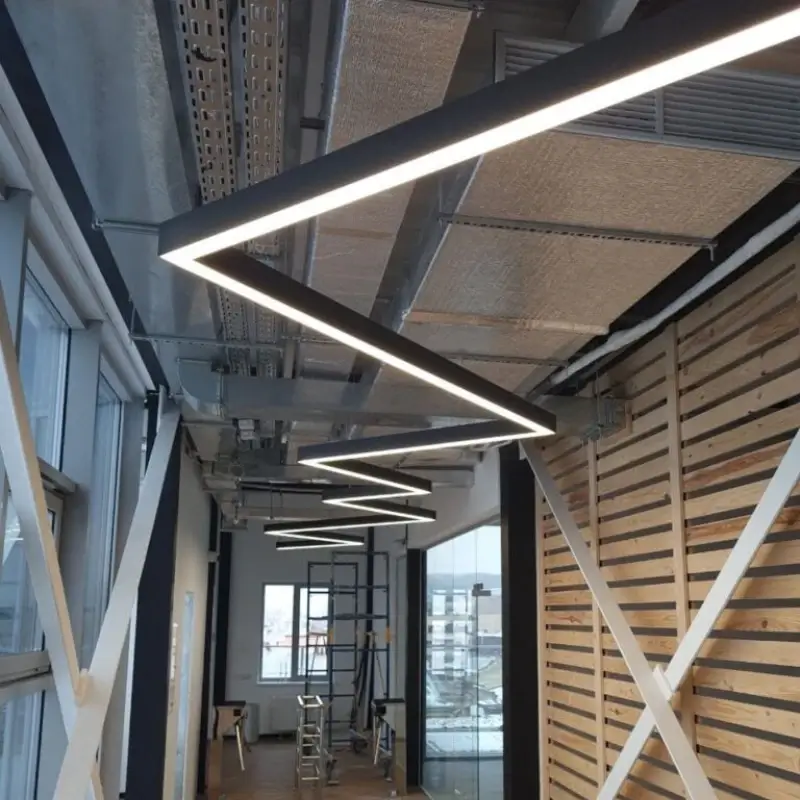
| Straight linear run | Draws an unbroken line; the default language of open-plan ceilings | Workstation rows, corridors, continuous architectural lines | Seam visibility; alignment over long runs |
| Rectangular frame | A closed loop that reads as a defined “room within a room” | Meeting tables, breakout areas, large reception zones | Suspension point count rises with perimeter length |
| Square frame | Symmetrical, orderly; sits comfortably on a ceiling grid | Boardrooms, structured commercial ceilings, repeated grids | Can read as static in informal spaces |
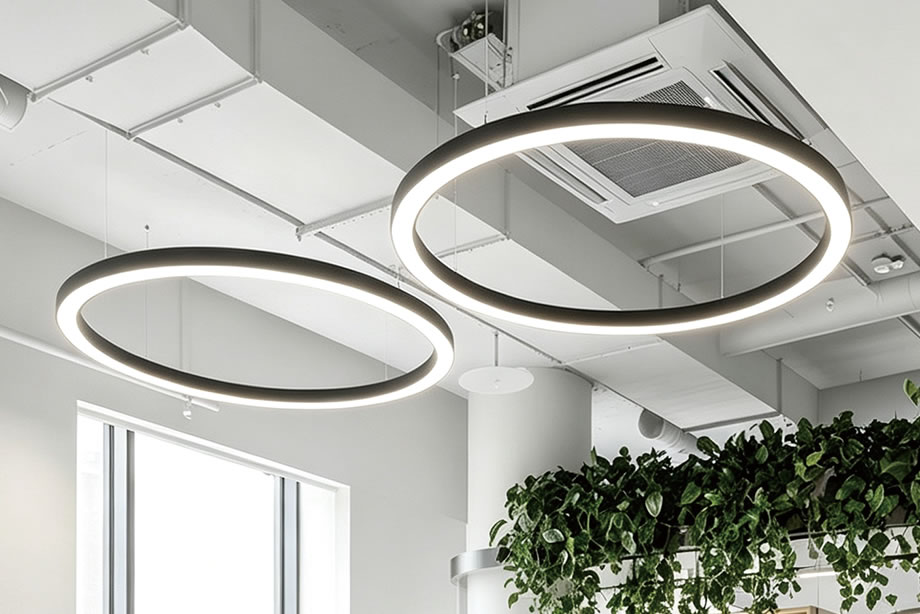
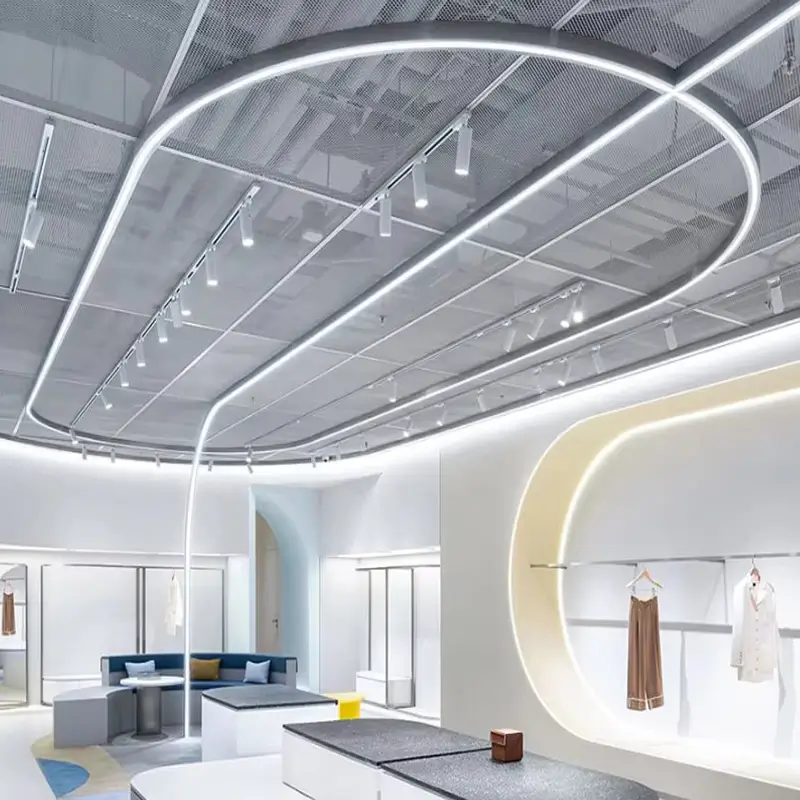
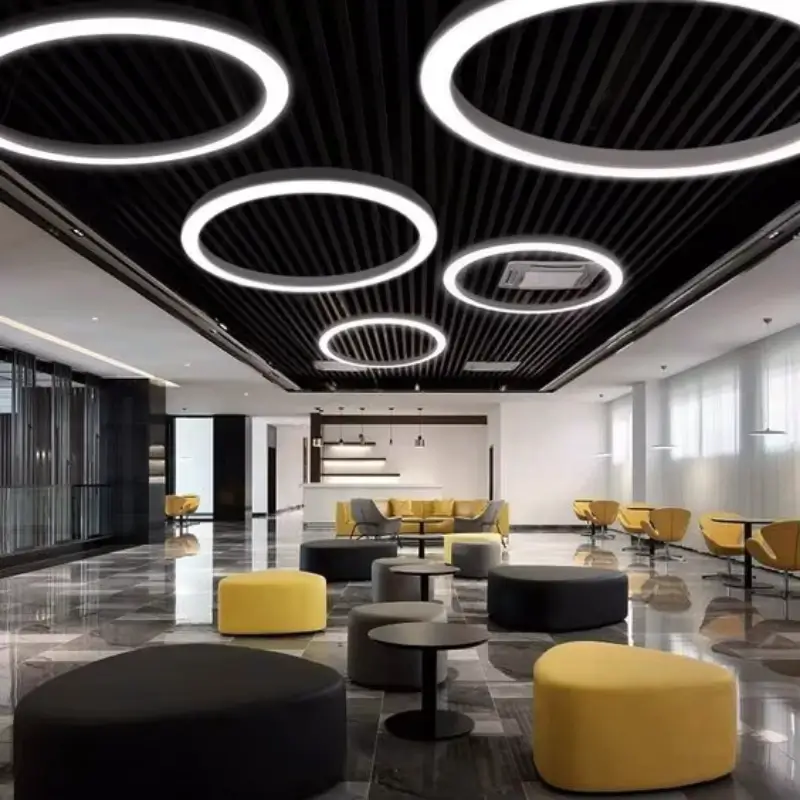
| Circular / ring | Softens a hard plan; gives a focal centre | Hotel lobbies, executive areas, atria, salon and lounge seating | Large diameters need more suspension points and careful levelling |
| Oval | Flowing contour with a softer visual weight than a rectangle | Reception desks, showrooms, retail entrances | Custom bending tolerances; longer sampling lead time |
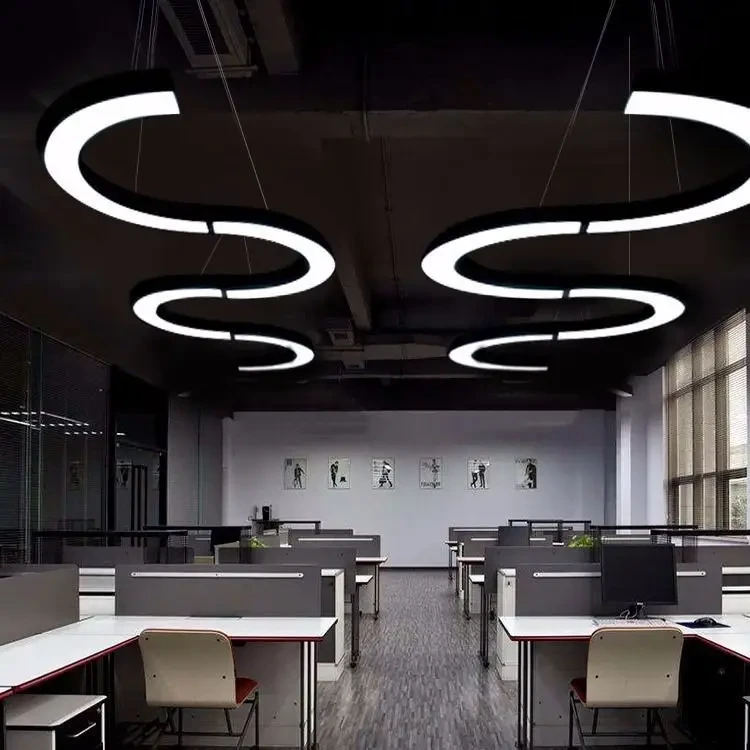
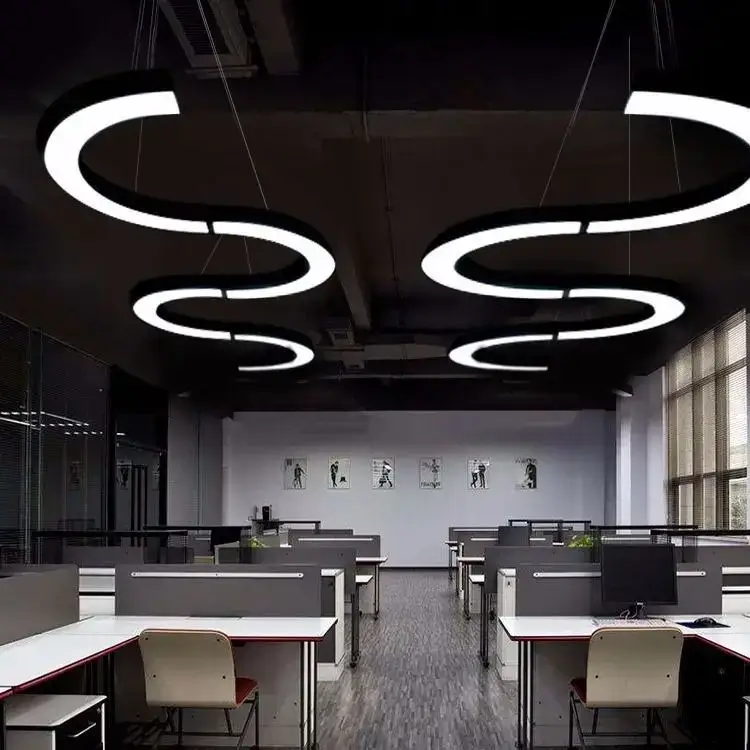
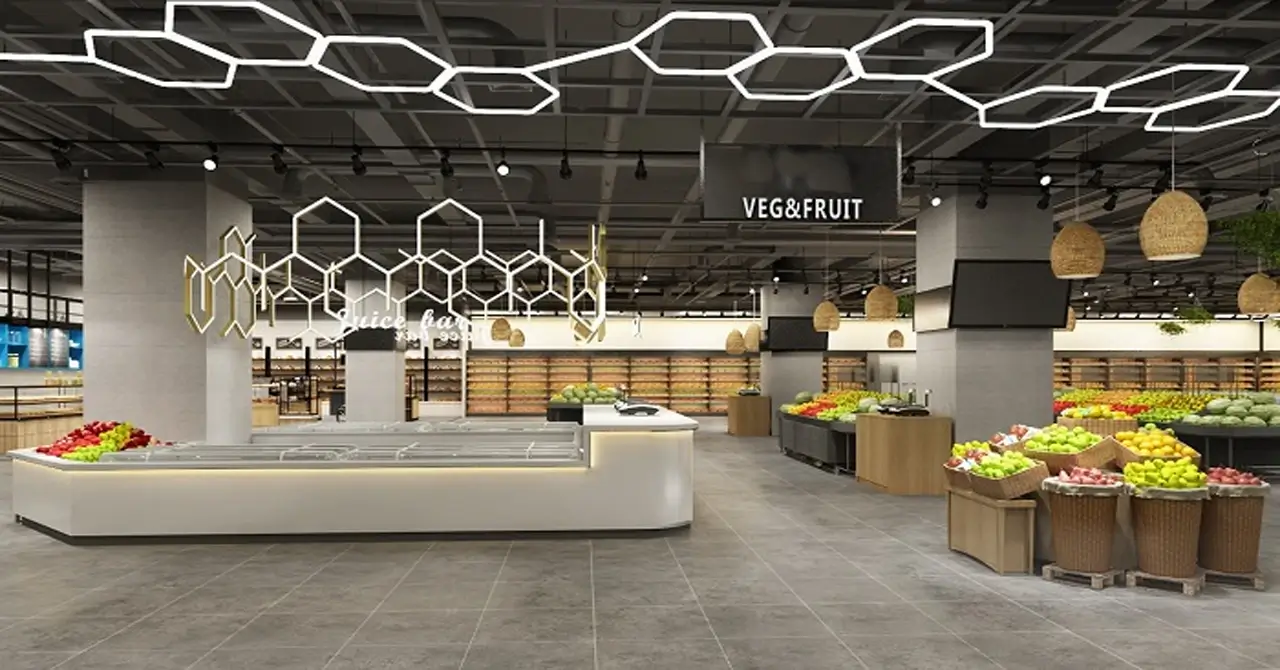
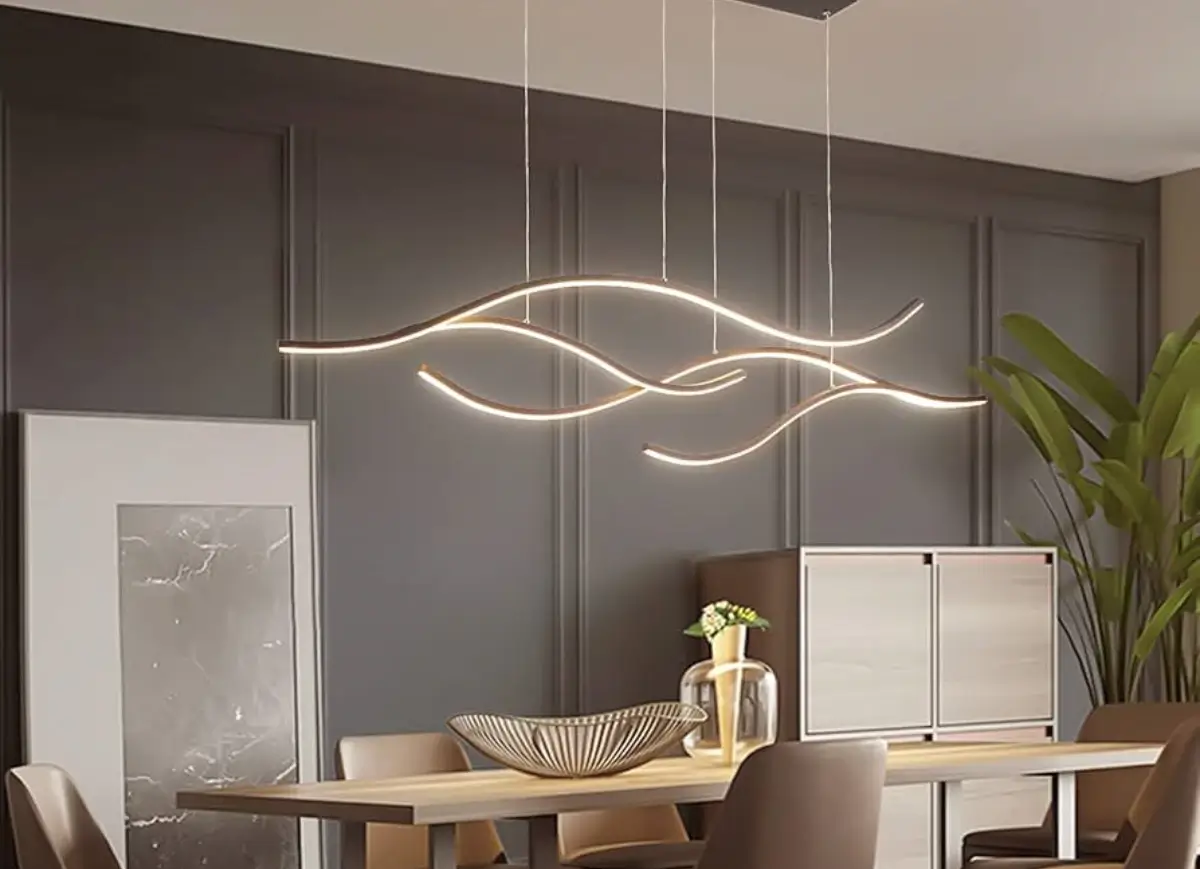
| Special shapes (S-curve, zigzag, cell modules) | Becomes the architecture rather than sitting inside it | Feature ceilings, studios, corridors that need a rhythm | Each module is project-specific — expect a prototype stage |
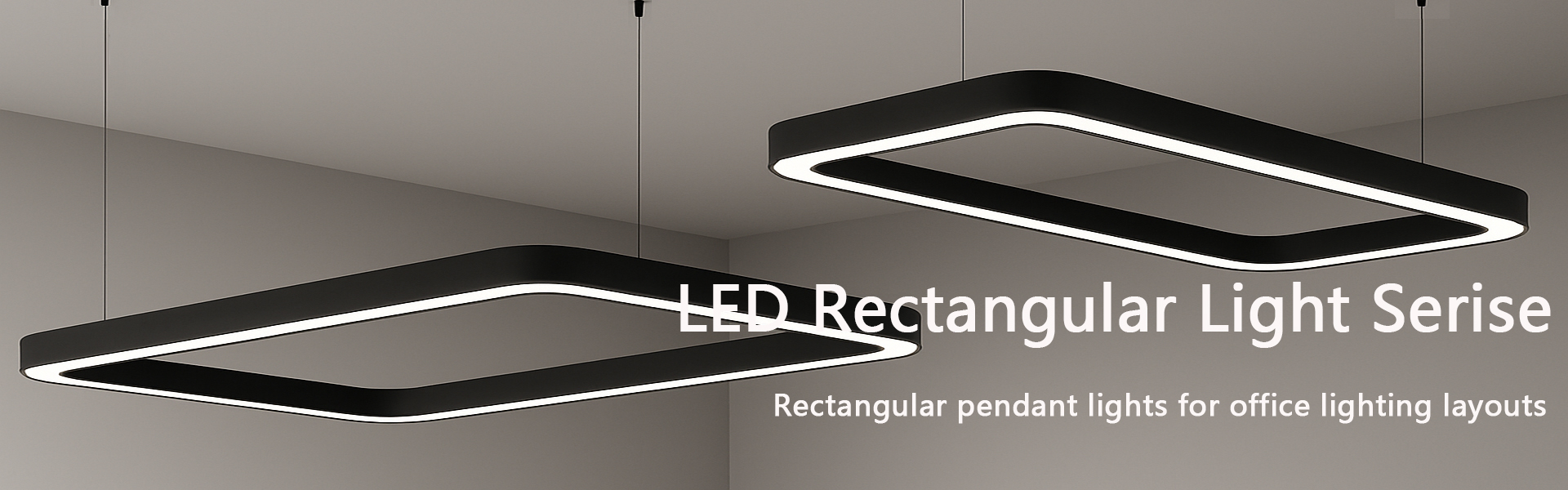
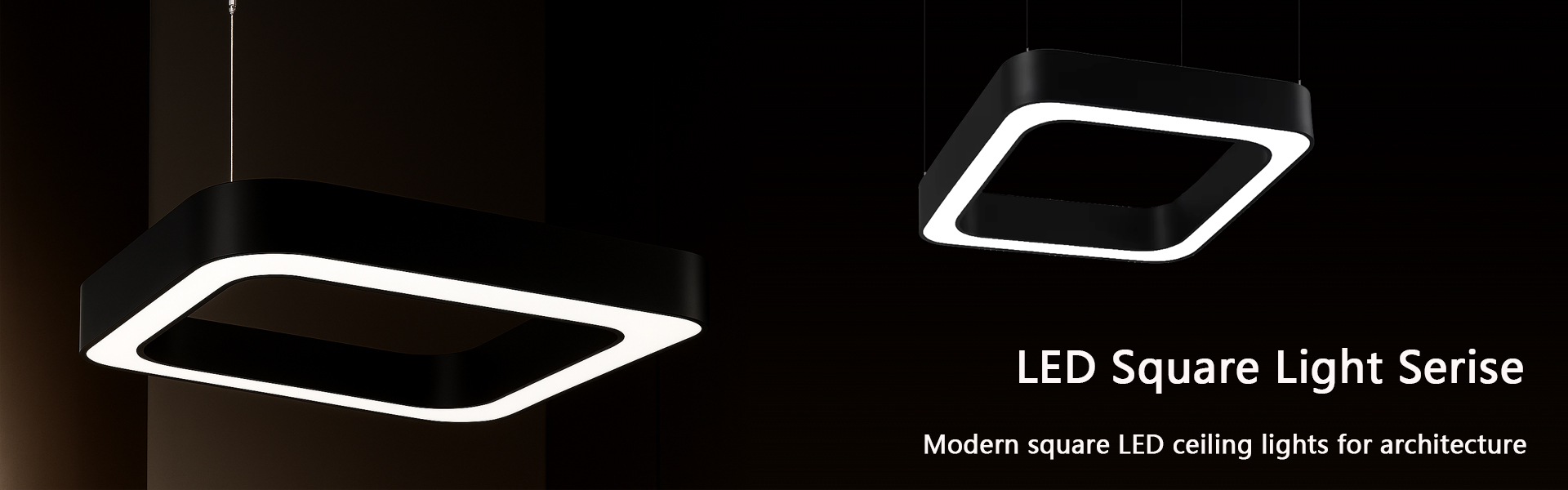
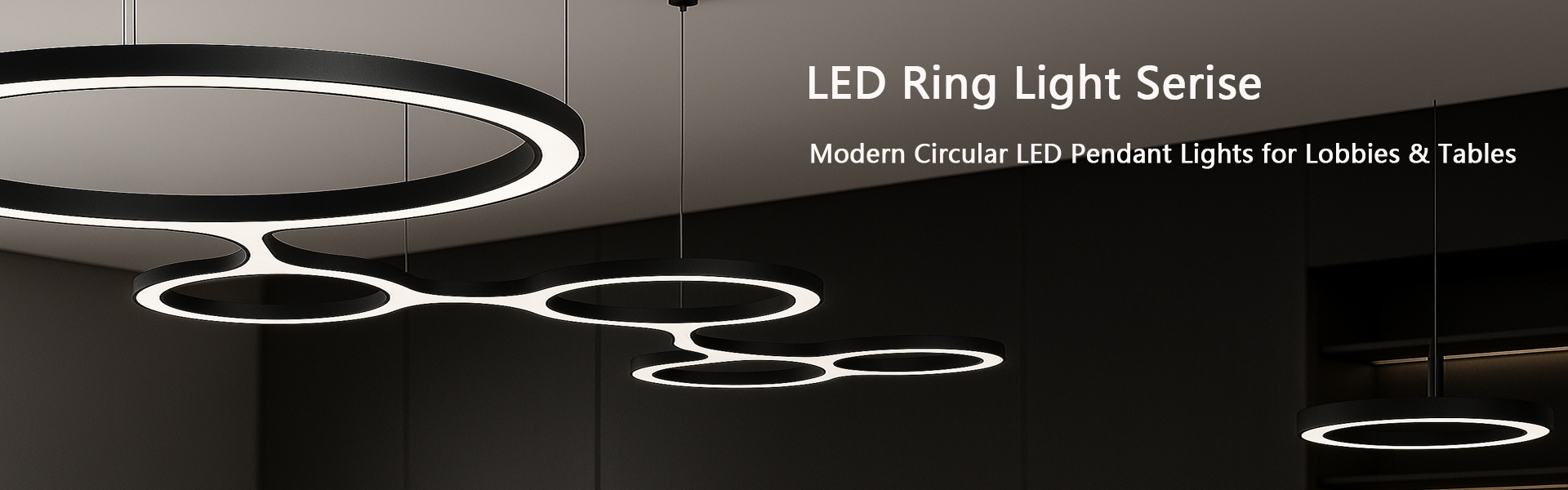
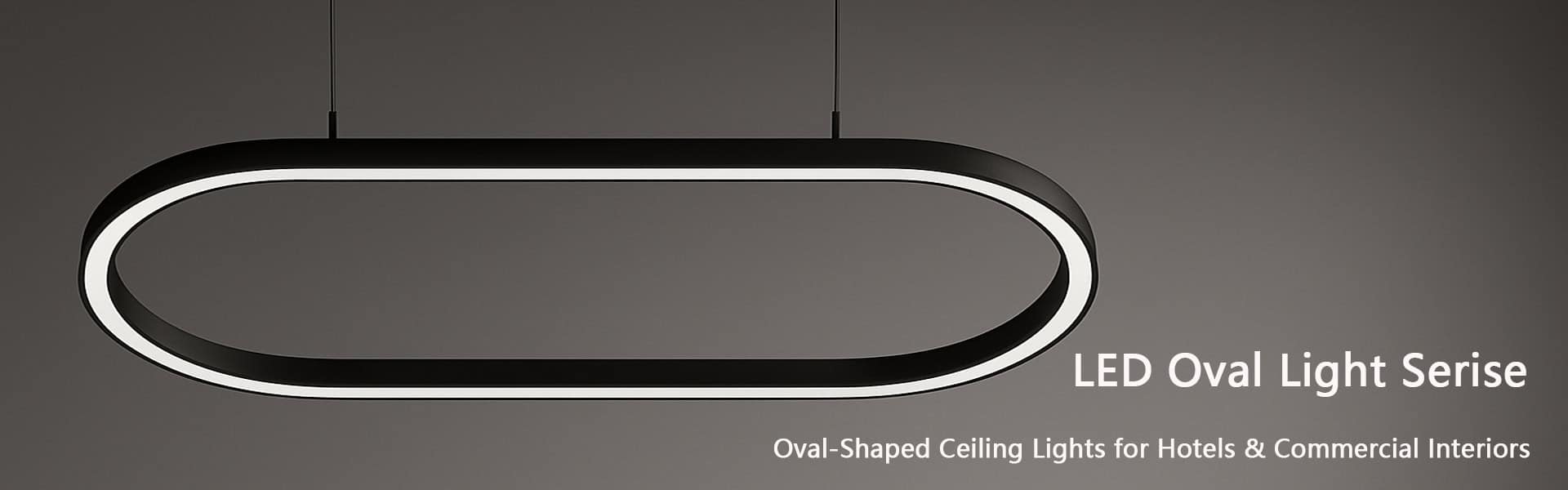
Engineering note
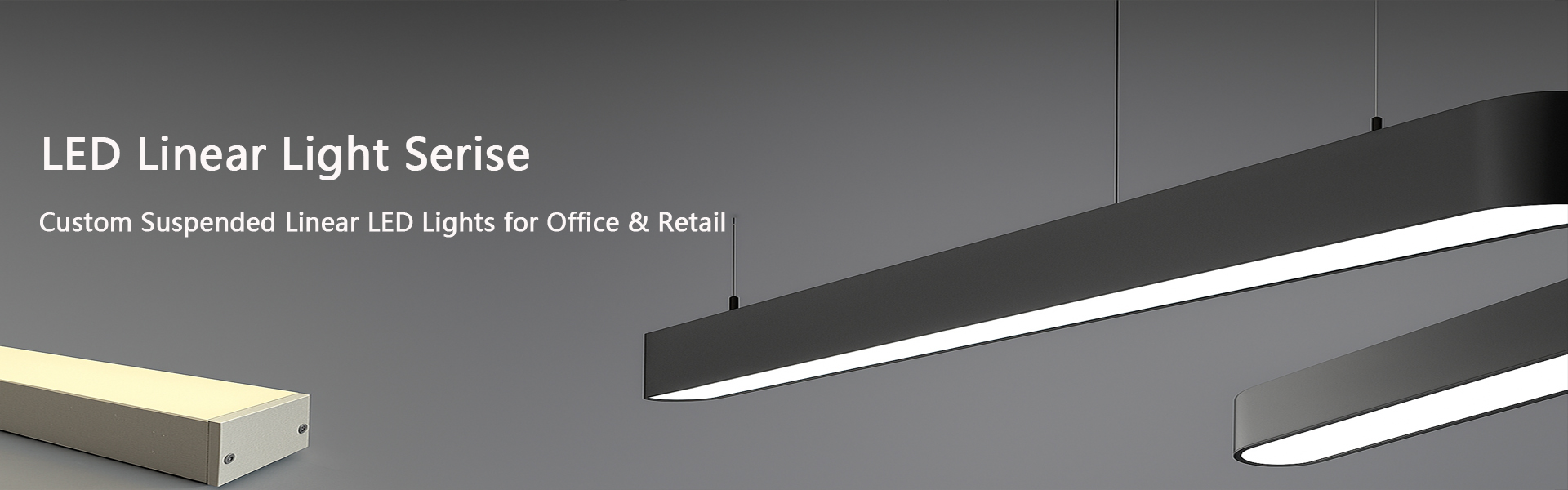
If your design includes a curved, zigzag or multi-cell shape, treat it as a separate work package from the straight runs. The extrusion, the PCB segmentation and the suspension layout all change, and a supplier who has only quoted you straight profiles will not have priced any of it. LIISEE covers custom-shaped luminaires as a dedicated category — raise it at brief stage, not at order stage.
03 Seven specifications that decide whether the room works
Two fixtures can look identical in a photograph and differ by years of service life. These are the seven numbers that separate a specification from a purchase.
| Specification | What to ask for | Why it matters | If you skip it |
|---|---|---|---|
| Efficacy (system lm/W) | Measured luminaire lumens per watt, not LED-package lumens per watt | The only honest measure of energy performance | You buy a “160 lm/W” chip inside a 110 lm/W fitting |
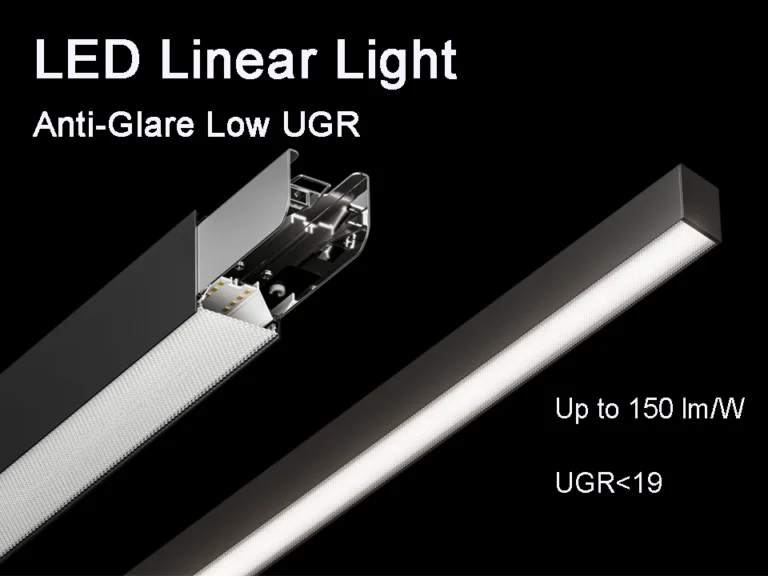
| UGR | A calculated value, ideally below 19 for screen work | Predicts discomfort glare at the workstation | Reflected glare on monitors and complaints you cannot fix after handover |
| CRI and R9 | Ra above 80 as a floor; 90 or better with strong R9 for retail and hospitality | Determines whether colours, finishes and food look correct | Products and interiors read grey or off-hue under the new lights |
| CCT and tunable white | 3000 K, 4000 K or a tunable range — and the tolerance around it | Sets the mood and supports circadian or scene-based schemes | Mixed colour temperature across one continuous ceiling |
| SDCM binning | Colour consistency within 3 MacAdam steps across the whole order | Keeps one run — and one building — visually uniform | Visible colour difference between adjacent modules |
| Flicker | Measured flicker percentage at full, mid and low output | A driver that is clean at 100% can flicker badly at 10% | Headaches, and visible banding in photographs and video |
| IP rating and driver | IP20 for normal interiors; higher where dust or moisture is present; named driver brand | Decides service life and where the fitting may legally be installed | Premature failure, and no replacement path when the driver dies |
Read the datasheet, not the headline
“Flicker-free” and “high CRI” are marketing words until they are backed by a number. Ask for the photometric file and the test report, and check that the efficacy figure is measured at the luminaire — including driver and optic losses — rather than quoted from the LED package.
04 Direct, indirect or both — choosing the distribution
This is the decision most often made by eye and most often regretted. It changes both the look of the ceiling and the amount of power you need.
- Direct. Light goes down onto the task plane. It is the most efficient option, and the one most likely to produce glare if the diffuser and the mounting height are wrong.
- Indirect. Light goes up and bounces off the ceiling. You get a soft, shadow-free field with no visible source — but your ceiling is now part of the optical system, so its reflectance, colour and condition set your real output.
- Direct / indirect. A split between the two. This is the usual answer for offices: enough downward light for the task, enough upward light to lift the ceiling and remove the cave effect.
- Side-emitting. Light leaves through the side of the profile. It is a niche choice, mainly for coves, reveals and feature walls.
| Space | Recommended distribution | Reasoning |
|---|---|---|
| Open-plan workstation | Direct / indirect, roughly 60/40 to 70/30, UGR below 19 | Task light where it is needed, ceiling lift to stop the space feeling enclosed |
| Meeting and boardroom | Direct / indirect, dimmable, glare-controlled | Screens and polished tables both punish uncontrolled direct light |
| Corridor and circulation | Indirect-dominant, or asymmetric toward the wall | Lower light levels mean glare control matters more than efficiency |
| Retail and supermarket | Direct with high CRI, plus accent where needed | The light has to sell the product; bounce light dilutes contrast |
| Reception and lobby | Decorative form with an indirect wash | First impression; the ceiling should read as bright without a visible hot source |
Before you choose indirect
Walk the site and look at the soffit. A dark, textured or service-heavy ceiling will absorb the light you are paying for, and no amount of wattage will make it read the way the visualisation did. If the ceiling cannot be made reflective, spend the budget on direct light with a properly specified diffuser instead.
05 Continuous runs: the seam is the whole point
A continuous run is sold on the promise of one unbroken line. Whether you get it depends on four details that rarely appear in a quotation.
The joint
Ask whether the connector produces a lit seam or a dark seam. A lit seam uses a diffuser that bridges the junction, so the line continues through it. A dark seam leaves a visible gap every module length. Neither is wrong, but only one matches the render you were shown — and you need to know which one you are buying.
The feed point
Decide where mains enters the run before the profile is cut. A feed that arrives at a joint can leave the end module dimmer than the rest, and moving it after installation means replacing the extrusion.
Through-wiring versus separate feeds
Long runs either carry a wiring harness through the profile (fewer drops, cleaner ceiling) or take a separate feed per module (simpler, more cables). Confirm which the quotation includes, and check the maximum run length per circuit against the driver load.
Suspension layout
As a starting rule of thumb, plan a suspension point roughly every 1.2–1.5 m and one at every joint, then confirm the final layout against the fitting weight per metre and the soffit type. Runs also have to be levelled as a system — a single high point will show as a kink in the line for the life of the building.
What to request before approval
Photographs of an actual joint, lit, at operating output — not a product render and not a catalogue crop. If a supplier cannot produce that image, assume the seam has never been detailed and price the risk accordingly.
06 Control protocol: 0–10 V, DALI or Triac
Control is where a lighting package quietly becomes expensive. Choose the protocol from what the building has to do, not from what is cheapest on the driver.
| Protocol | How it behaves | Right for | Constraint to accept |
|---|---|---|---|
| Non-dim (ON/OFF) | Switched circuits only | Stores, back-of-house, circulation | No scene setting, no daylight response |
| 0–10 V | Analogue signal dims everything on the circuit together | Open offices, classrooms, simple energy schemes | Needs an extra pair of control wires; whole-circuit granularity only |
| DALI (DT6) | Digital addressing — control per fitting or per group | Offices needing zoning, reconfigurable floors, reporting | Commissioning effort and a bus that has to be designed |
| DALI (DT8) | Adds tunable-white control on the same bus | Human-centric and scene-based schemes | Higher driver cost; both channels must be specified together |
| Triac / phase-cut | Dims from the mains wiring with no control cable | Retrofits where new cabling is impossible | Limited low-end performance and driver compatibility |
| Wireless / app | Radio or app control, often per fitting | Small projects, showrooms, demonstration areas | Not normally appropriate as the backbone of a large commercial scheme |
The practical test: if you need to address individual fixtures, re-zone a floor without rewiring, or drive tunable white, you are in DALI territory. If you only need to bring the whole room down in the evening, 0–10 V will do the job for less money and less commissioning.
07 The specification envelope you can actually order
Guides are useful, but at some point you need to know what a factory can really build. The table below is the current LIISEE linear-light specification envelope — the range you can configure against, published for direct comparison rather than as a single fixed SKU.
| Model | Length | Power | Efficacy | CCT | CRI | UGR | Control | Installation |
|---|---|---|---|---|---|---|---|---|
| Reflex Indirect | 600–2400 mm | 20–80 W | up to 150 lm/W | 3000–5000 K | >80 / >90 | <19 | DALI / 0-10V / Non-dim | Suspended / Recessed |
| K-Lens Linkable | 600–1800 mm | 18–72 W | up to 160 lm/W | 3000–6500 K | >80 / >90 | <19 | 0-10V / DALI | Suspended / Surface |
| Slimbay UGR<19 | 1200–1800 mm | 24–60 W | up to 155 lm/W | 3000–5000 K | >80 | <19 | 0-10V / DALI | Trackway / Suspended |
| Single Slimbay | 1200–1500 mm | 20–48 W | up to 150 lm/W | 3000–5000 K | >90 | <19 | 0-10V / DALI | Suspended / Surface |
| DIP Switch Seam | 1200–3600 mm | 30–90 W | up to 145 lm/W | 3000–5000 K | >80 | <19 | 0-10V / DALI | Suspended / Continuous |
| Smart Multicolour Tube | 1200–1500 mm | 18–40 W | — | RGB + 2700–6500 K | >80 | — | WiFi / App | Suspended / Surface |
Common to the range: IP20 as standard; 220–240 V and 100–277 V input options; 5-year system warranty; custom lengths, wattages and finishes available on request.
What sits behind the numbers
- 6063-T5 aluminium housing — rigid, lightweight and an effective heat path, which is what keeps LED output stable over the life of the fitting.
- Polycarbonate diffuser — heat-resistant, impact-resistant and UV-stable, so it does not yellow into a colour shift two years in.
- Brand-name LED chips and drivers with documented LM-80 lifetime data, rather than unnamed equivalents.
- Compliance and documentation — CE and RoHS, ISO 9001 manufacturing, plus datasheets, IES/LDT photometric files and test reports for tender submission.
How to read the envelope
Model names define a family, not a fixed item. Within each row you still choose the exact length, wattage, CCT, CRI, finish and control option — which is why an RFQ has to state them explicitly. Two buyers can order “Slimbay UGR<19” and receive different fittings.
08 Installation: the methods and what to confirm before sign-off
The same luminaire family can be mounted several ways, and the mounting decides how the room feels as much as the optics do.
| Method | Where it is used | Confirmation needed |
|---|---|---|
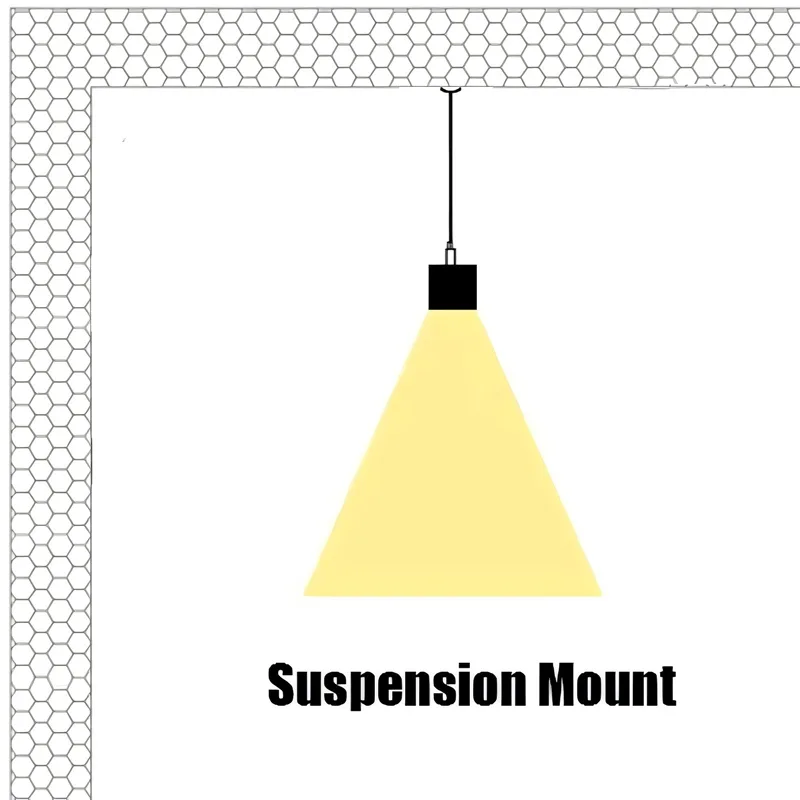
| Suspended (wire or rod) | Open soffits, exposed services, offices and retail | Soffit type, drop height, feed position, suspension points |
| Surface mounted | Solid ceilings where there is no void | Fixing centres, ceiling finish, cable entry point |
| Recessed / trimless | Plasterboard and grid ceilings wanting a flush line | Cut-out size, void depth, access for driver maintenance |
| Trackway | Retail and spaces that get reconfigured | Track rating, adapter compatibility, future re-zoning |
Confirm before you sign off
- Soffit construction and what it will safely carry per suspension point.
- Finished suspension drop, measured from structural soffit to fitting.
- Where the mains feed enters each run — and whether it lands on a joint.
- Whether you need sensor, emergency or both integrated into the profile.
- Weight per metre, including driver, and the access route for maintenance.
- Who commissions the control system, and when that happens relative to handover.
09 Where suspended linear gets specified
Applications differ far more in glare tolerance and colour requirements than in raw light level. The targets below are the classes typically specified for commercial interiors — confirm them against the current edition of EN 12464-1 or your local code before you commit.
| Space | Typical target class | Geometry | Distribution | Control |
|---|---|---|---|---|
| Open-plan office | 500 lx class on the task area, UGR ≤ 19 | Straight runs, linkable | Direct / indirect | DALI or 0–10 V with daylight sensing |
| Meeting and boardroom | 500 lx class, UGR ≤ 19 | Rectangular or square | Direct / indirect, dimmable | Scene control, DALI preferred |
| Corridor and circulation | 100–200 lx class | Straight or zigzag | Indirect-dominant or asymmetric | Occupancy sensing |
| Retail and supermarket | 300–500 lx class, CRI ≥ 90 | Straight runs, cell or loop features | Direct with accent | 0–10 V or DALI zoning |
| Reception and lobby | 300 lx class, appearance-led | Circular, oval or square | Indirect wash with decorative form | Scene control |
| Hospitality and restaurant | Appearance-led, warm CCT | Circular, oval, S-curve | Indirect-dominant | Dim-to-warm or scene control |
| Studio and education | Task-dependent, flicker-critical | Straight runs, modular cells | Direct / indirect | DALI; verify flicker at low output |
10 From brief to bulk delivery in five steps
A transparent process is what keeps a lighting package off the critical path. This is the sequence LIISEE runs for project orders.
-
Requirement brief
You send the application, ceiling type, run lengths, target lux and UGR, CCT and CRI, control protocol and quantity.
-
Design and proposal
The right family, optic and control gear are recommended back to you — with photometric support and pricing.
-
Sample and approval
You test a real fitting before committing to volume. This is the stage to check the seam, the finish and the dimming behaviour at low output.
-
Production and QC
Batch manufacturing with ageing tests and documented inspection before anything is packed.
-
Shipping and support
Export packaging, FOB / CIF / DDP terms and after-sales spares for the life of the installation.
RFQ checklist — send this and you will get a real price
- Application and room type (office, retail, hospitality, education, circulation).
- Ceiling type and finished suspension drop.
- Run drawing or marked-up plan with lengths and corner positions.
- Target illuminance and maximum UGR.
- CCT, CRI and R9 requirement, and whether tunable white is needed.
- Control protocol, and who commissions it.
- IP rating, emergency and sensor requirements.
- Quantity, target delivery date, and preferred Incoterm (FOB, CIF or DDP).
- Certification and documentation needed for tender (datasheets, IES/LDT, LM-80, test reports).
One more check on commercial terms
Confirm MOQ, lead time, payment terms and Incoterms in writing inside the quotation. FOB, CIF and DDP each shift a different share of cost and risk — choose the one that matches how your team handles freight and customs.
11 Frequently asked questions
What is a suspended linear ceiling light, in one sentence?
A luminaire built from an extruded aluminium profile that hangs from the soffit on wires or rods and produces a continuous line of light — rather than the point source you get from a downlight or a spot.
How long can a suspended linear luminaire be made?
Standard module lengths typically run from 600 mm to 3600 mm depending on the family, and bespoke lengths are available on request. For anything longer than a single module, specify it as a continuous run and confirm the seam type, the feed position and the through-wiring arrangement.
Can I get a continuous run with no dark gaps?
Yes — but only if you specify it. Ask whether the joint is a lit seam or a dark seam, and request photographs of an actual joint at operating output. A run that looks seamless in a render can still arrive with a visible gap at every module.
Direct or indirect — which should I choose for an office?
A direct / indirect split, roughly 60/40 to 70/30, with UGR below 19. You get enough light on the task plane and enough upward light to lift the ceiling. Purely indirect schemes are comfortable but depend heavily on ceiling reflectance; purely direct schemes are efficient but glare-prone.
Is UGR below 19 always necessary?
It is the right target wherever people work at screens for long periods. In circulation spaces, back-of-house areas and purely decorative applications it is less critical. Where it does apply, ask for a calculated UGR figure for the actual luminaire — not a generic claim.
Do I need DALI, or is 0–10 V enough?
0–10 V is enough when you only need to dim an entire circuit together. Choose DALI when you need per-fixture or per-group addressing, the ability to re-zone a floor without rewiring, or tunable white (DALI DT8). Triac is best reserved for retrofits where no new control cable can be run.
What should I check on flicker?
Ask for measured flicker percentage at full, mid and low output. A driver that is clean at 100% can flicker badly at 10%, which is exactly the level an office sits at on a bright afternoon. This matters most in studios, education and anywhere video recording happens.
Which documents do I need for a tender submission?
Product datasheets, installation guides, IES/LDT photometric files, LM-80 lifetime data, test reports and compliance certificates. LIISEE supplies these as part of project support, alongside CE and RoHS documentation and ISO 9001 manufacturing records.
Can the fixtures be customised for my brand?
Yes. OEM and ODM customisation covers length, wattage, CCT, CRI, housing colour, installation method, control options, packaging and private-label branding. Special-shaped profiles — curved, zigzag and multi-cell — are handled as a dedicated category with a prototype stage.
Specifying a suspended linear run?
Send us the ceiling type, run length and target lux / UGR and we will come back with the right family, the photometric file and a price you can compare. IES / LDT files, datasheets and test reports are available for tender submission.